Pick the model by what a wrong answer costs
"Use medium effort, never max" is a good default and a bad rule. I route every agent task by one question: what does a wrong answer cost?
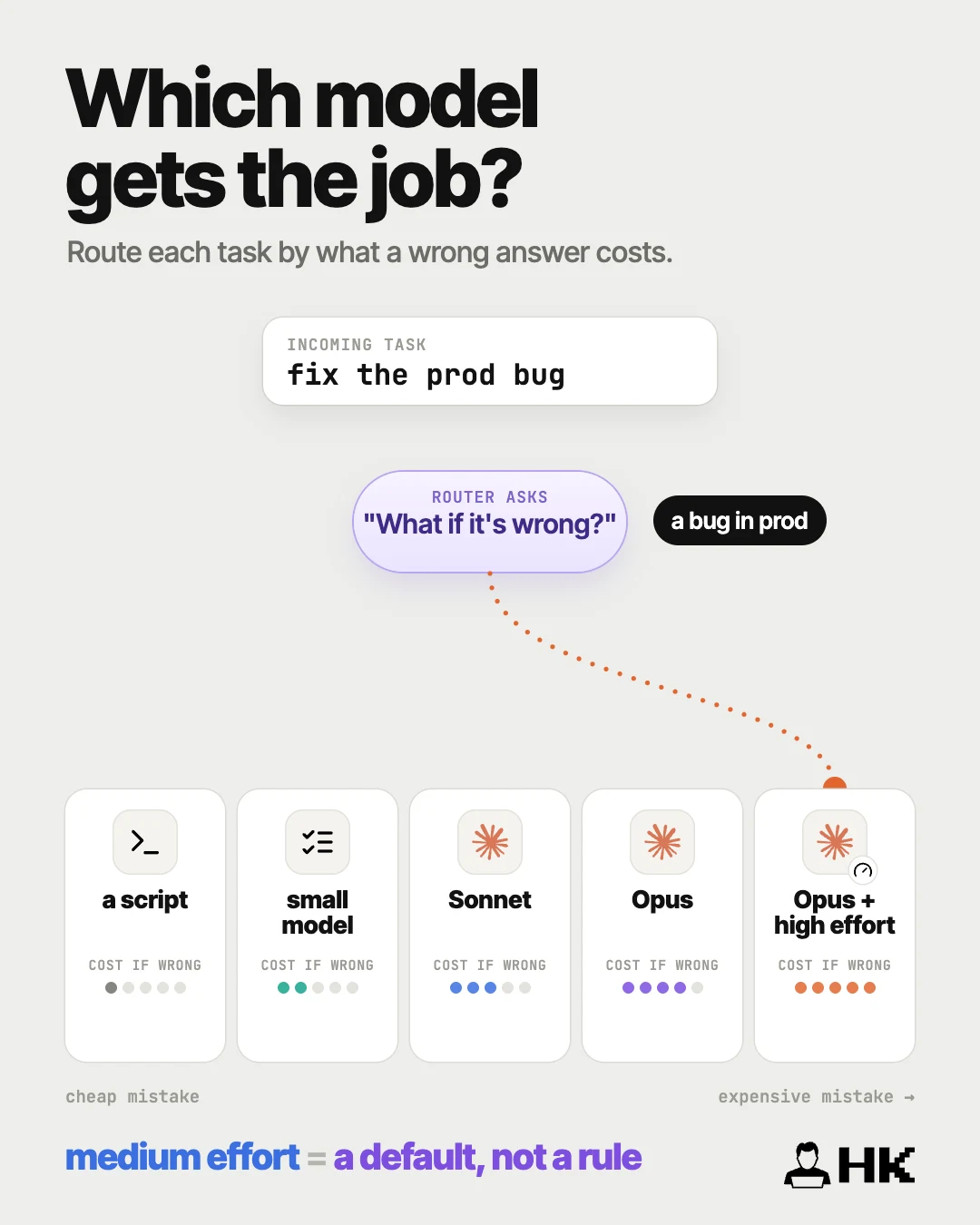
"Use medium effort. Never max." was the Claude tip all over my feed today. It's a good default. As a rule for every task, it's wrong in both directions. It overpays for work a script should do, and it underpays for the work where a mistake is expensive.
I run a small set of scheduled agents for my own work. Before anything runs, each task gets one question: what does a wrong answer cost?
The routing table
| Task | If it's wrong | What runs it |
|---|---|---|
| Counting, dates, limits, duplicates | It shouldn't be wrong at all | A plain script, no model |
| Many small yes/no checks | One bad item | A small decision model, every item in one batched call |
| Reading pages, filling forms | A retry | Sonnet |
| Pulling facts out of long pages | A cluttered main context | A Haiku sub-agent that hands back a short summary |
| Planning and hard calls | Days of rework | Opus |
| Code that ships | A bug in production | Opus with high effort |
A script first
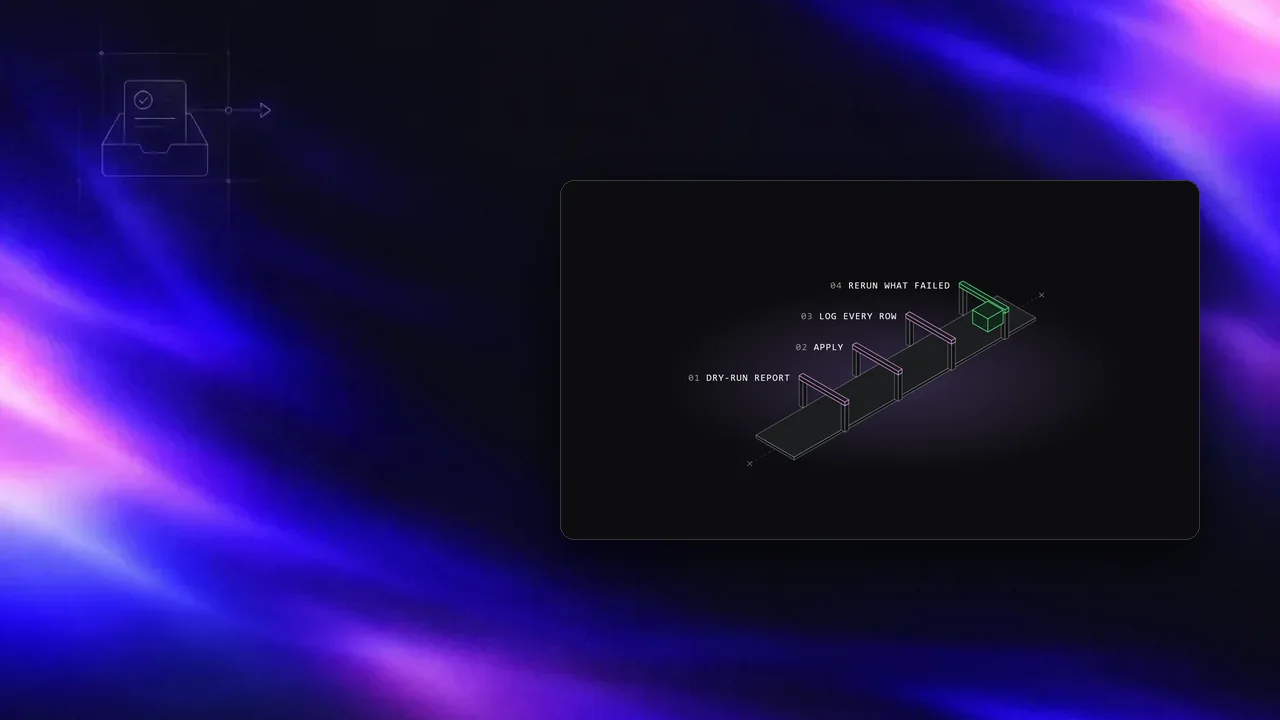
Anything with an answer you can compute never goes to a model. Dates, caps, word counts, duplicate checks. A model can get these wrong. A script can't, and it costs nothing to run again.
Small models for volume
Yes/no questions over many items go to a small decision model in one call. This afternoon it screened 40 LinkedIn posts for $0.0016. It only filters and ranks. It never makes the final call on anything that goes out in my name.
The big model where a mistake is expensive
Planning and code that ships get the strongest model and more effort. The extra tokens are cheap next to a bad plan or a production bug. A sub-agent (a helper with its own context window) does the long reading, so the expensive session only sees the summary.
Before you pick a setting
- Can a script answer it? Then no model.
- Is it many small items? Batch them to a small model and spot-check a sample.
- Would a wrong answer reach a person or production? Pay for the big model.
- Check the routing again when a model or a price changes.
Medium is a good default. The routing is the rule.
Notes on this post
Join in
Leave a comment.
Sign in to add your note to this post.
Only your name and avatar are used.