ldraw-nova: AI agents build LEGO models by writing Python geometry
In ldraw-nova, models write a plan and a Python generator instead of raw coordinates, but nothing checks physics or stability.
Fewer than 1% of online learners finish Harvard’s CS50. Why most quit, and the habits that got me through both CS50x and CS50 Web.

150,000 people register for Harvard’s CS50 every year.
Less than 1% finish.
I finished twice — CS50x and CS50 Web. Here’s what I learned about why most people quit, and how I didn’t.
CS50 is Harvard University’s introduction to computer science. It’s free, it’s online, and it’s arguably the most famous programming course in the world.
David J. Malan, the instructor, has turned a college course into a global phenomenon with over 6 million registrants on edX.
Sounds amazing, right?
It is. But there’s a catch.
Each problem set takes 10–20 hours. Not 10–20 minutes. Hours.
The course is marketed as “12 weeks,” but most online students take 6–12 months to complete it. The total time investment is 200+ hours.
That’s not a course. That’s a part-time job.
On Harvard’s campus, 99.6% of students complete CS50. Online? Less than 1%.
Same content. Same assignments. Same instructor.
The difference? On campus, you have deadlines, TAs, classmates, and social pressure. Online, you have… yourself.
No one checks if you’re doing the work. No one cares if you quit. The only accountability is your own discipline.
Week 1 feels manageable. By Week 4, you’re writing C code, dealing with pointers, and questioning every life decision that led you here.
The course doesn’t hold back. It treats you like a Harvard student from day one.
I failed the same problem set three times before passing. Each attempt took hours. The frustration was real.

My first attempt at CS50x, I quit after Week 3. The C language broke me.
Six months later, I tried again. This time, I changed my approach:
I committed to 1 hour every day. Not 5 hours on weekends. One hour, every single day. Consistency beat intensity.
I stopped comparing my progress to others. Some people finish in 3 months. I took 8 months. It doesn’t matter. Finishing is finishing.
I used the rubber duck method. When stuck, I explained my code out loud. It sounds stupid. It works.
After CS50x, I thought CS50 Web would be easier.
I was wrong.
Different challenges, same intensity. Django, SQL, JavaScript, React — all packed into 6 projects.
But this time, I had the discipline muscle built from CS50x. I knew how to push through the frustrating weeks.
The second course took me 5 months.

The technical skills matter. But that’s not what changed how I work.
CS50 forces you to write pseudocode before real code. At first, it felt like a waste of time. Now I do it automatically.
Most bugs come from unclear thinking, not typos. Pseudocode catches them before they exist.
Before CS50, my debugging was: change random things until it works.
After CS50: binary search the problem. Add print statements. Isolate variables. Find the exact line that breaks.
This single skill cut my debugging time in half.
CS50 starts with C, not Python. It teaches memory management, pointers, and how computers actually work.
This felt unnecessary at first. “I just want to build websites.”
But understanding C made JavaScript make sense. Understanding how memory works made me a better React developer.
You don’t need to master the layer below. But knowing it exists changes how you think.
Honest answer: It depends.
Take CS50 if:
Skip CS50 if:
CS50 is not the fastest path to becoming a developer. But it might be the deepest.
The certificate looks nice on LinkedIn. But that’s not why it matters.
Finishing CS50 proves something to yourself:
You can learn hard things without a teacher standing over you. You can debug for 6 hours and not quit. You can stay disciplined when no one is watching.
In a world of tutorial hell and abandoned courses, completion is rare.
That’s why only 1% finish.
And that’s exactly why it’s worth doing.
I’m Huseyin, a Full Stack Engineer with 5+ years of experience. I build e-commerce systems at scale and occasionally write about learning and development. Connect with me on LinkedIn.
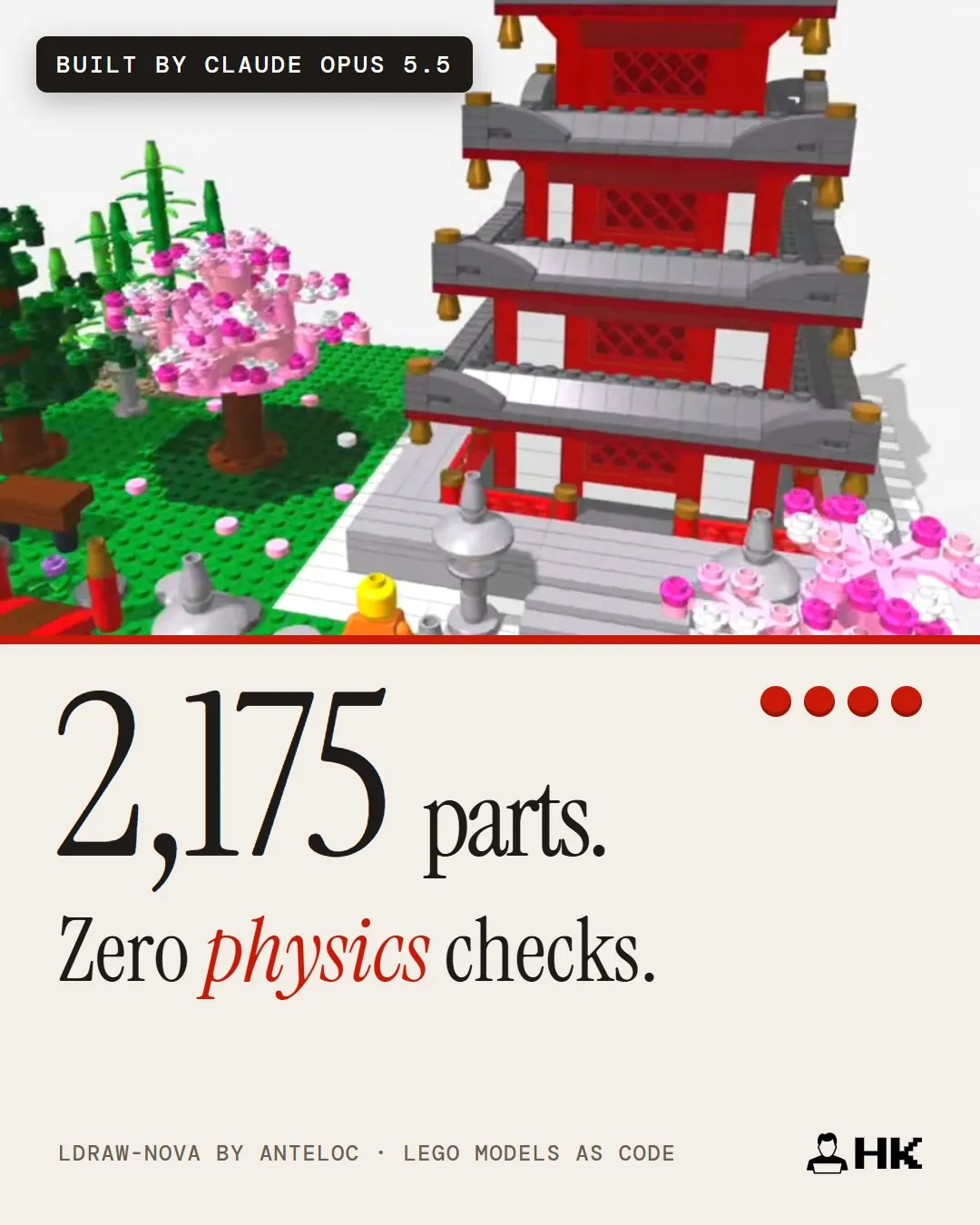
In ldraw-nova, models write a plan and a Python generator instead of raw coordinates, but nothing checks physics or stability.

In stillwet's painter chains, Claude read earlier notes as instructions and missing notes failed silently, so label, log and verify agent handoffs.
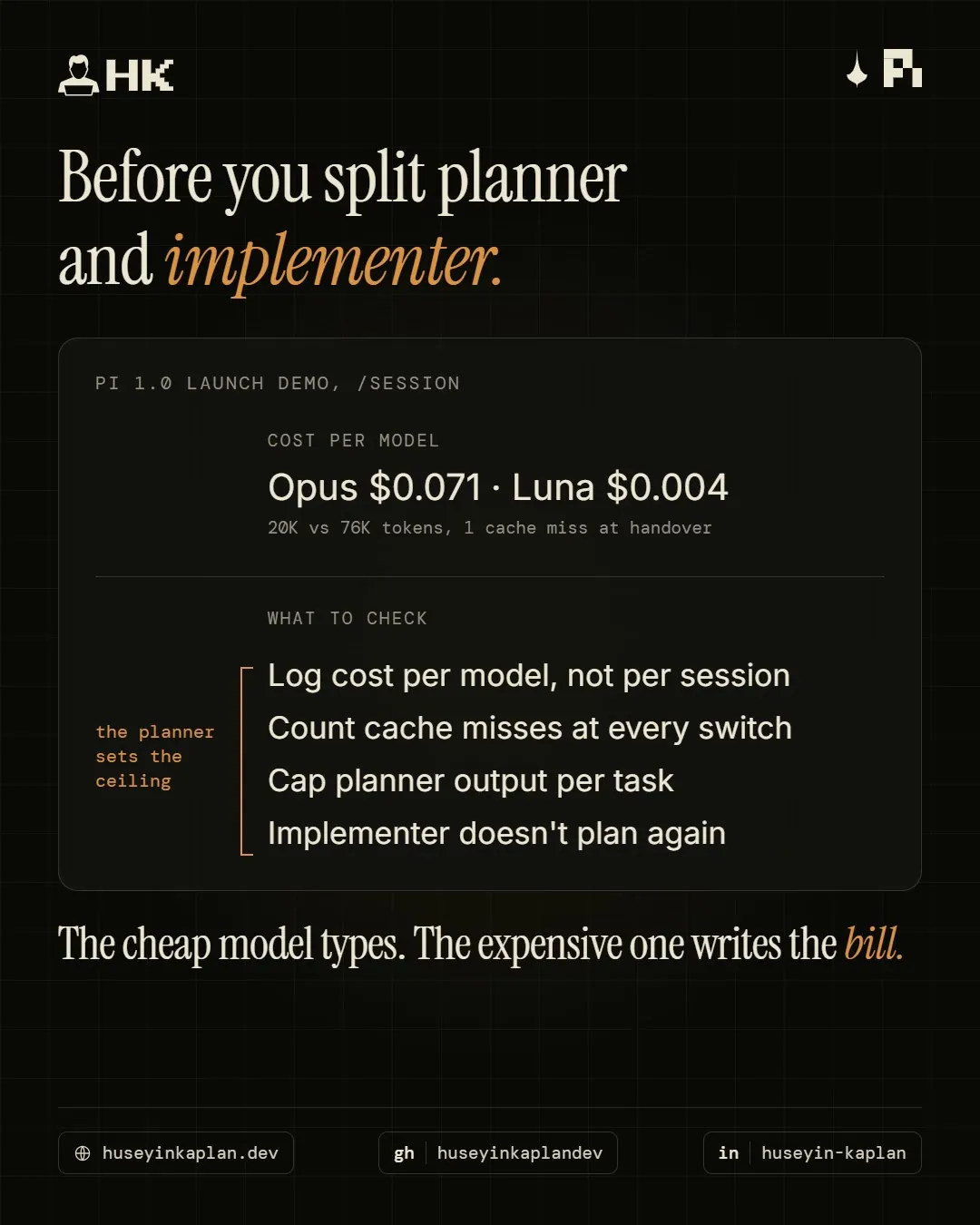
In Pi 1.0's demo, Opus used a fifth of the tokens yet cost 18x more than GPT 6 Luna, so log cost per model and count cache misses.